

Trending
Cyprus continues to be a welcoming and popular destination for international visitors, offering beautiful beaches, historic towns, established resorts and a well-developed tourism infrastructure. The island remains an appealing choice for a holiday, although travellers may understandably have questions about the wider security situation in the eastern Mediterranean and the possibility of further escalation in the Middle East.
The Republic of Cyprus is not involved in the ongoing military conflict, and the island continues to receive international visitors. However, developments in the wider region can sometimes affect travel plans, particularly through changes to flight routes, airspace restrictions or temporary disruption to airline schedules.
For most holidaymakers, the best approach is to stay informed and take a few sensible precautions before and during their trip. Checking official travel advice, keeping an eye on airline updates and following local guidance can help visitors plan with confidence. This guide looks at the current regional situation alongside practical advice on transport, health, accommodation and everyday safety in Cyprus.
For villa guests, choosing a well-located, verified property and arranging key details before arrival can remove much of the uncertainty. At Ezoria, our Cyprus-based team can help guests arrange airport transfers through trusted local partners and offer practical local support throughout their stay.
Is Cyprus Safe Amid the Middle East Conflict?
The regional security situation is one of the main concerns for travellers considering Cyprus. Although the island is not part of the ongoing military conflict in the Middle East, its position in the eastern Mediterranean means that regional developments can have an impact on security and travel arrangements.
The situation has already affected Cyprus. On 2 March 2026, a Shahed-type drone struck a building in the British Sovereign Base Area at Akrotiri, causing minor material damage. The incident prompted heightened security measures and highlighted the possibility of regional tensions affecting the island. The Cypriot government stated that the Republic of Cyprus was not involved in military operations and did not intend to become involved.
Does the Regional Situation Make Cyprus Unsafe for Tourists?
Travel advice from different governments does not give exactly the same assessment. The US Department of State lists the Republic of Cyprus at Level 1, advising travellers to exercise normal precautions. The UK Foreign, Commonwealth & Development Office warns of a high risk of sudden escalation in the Middle East and recommends that travellers monitor developments and keep departure plans under review. Australia's Smartraveller advises a high degree of caution because of the volatile regional security situation.
These differences matter: there is no single international assessment that guarantees the same level of risk for every traveller. At the same time, the Republic of Cyprus remains a functioning tourist destination, with established resorts, airports, hotels, restaurants and visitor services. The regional conflict does not mean that everyday life across the island has become a military situation.
Current Travel Advice and Regional Considerations
Cyprus travel advice can change, particularly around entry requirements, local security notices, and procedures at crossing points. Check official guidance before booking and again shortly before departure, rather than relying on an older blog post or social media update.
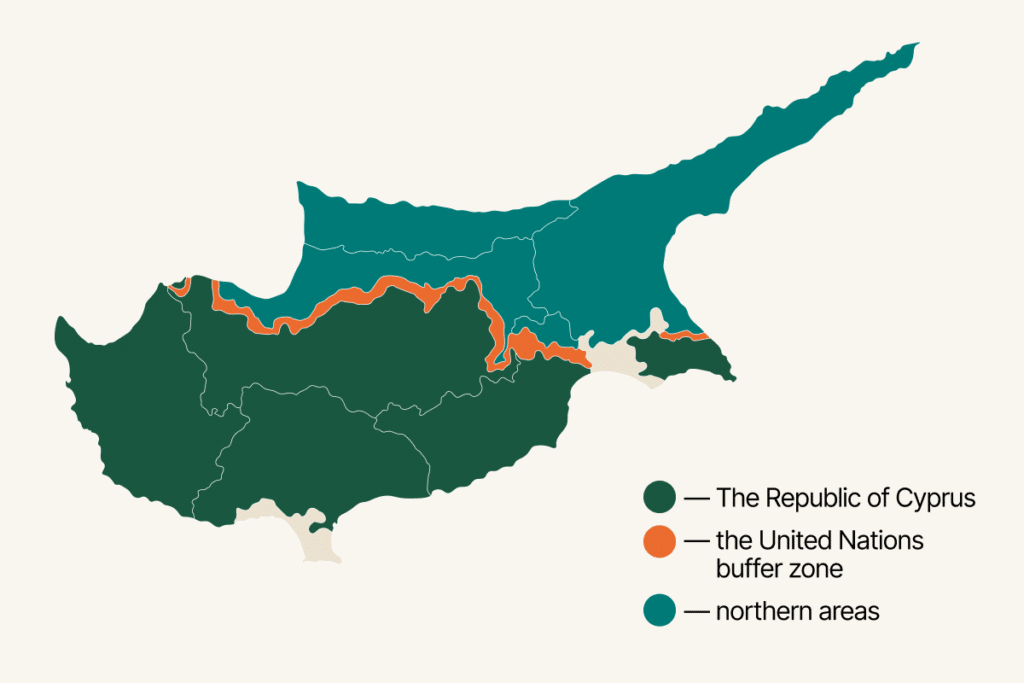
The Republic of Cyprus, the United Nations buffer zone, and northern areas have different practical considerations for visitors. Stay within permitted areas, use official crossing points where relevant, and follow notices from local authorities.
Which Official Travel Advisories Should You Check?
Check the travel advice issued for your passport nationality. British travellers should review the Foreign, Commonwealth & Development Office (FCDO) guidance, while United States citizens should consult the U.S. Department of State.
Your own embassy or foreign ministry remains the most relevant source for Cyprus entry requirements, passport rules, health notices, and consular support. Review this information before travel and shortly before leaving home, especially if you plan to cross between different parts of the island.
Is It Safe to Cross Between South and North Cyprus?
Many visitors cross between south and north Cyprus through designated checkpoints without difficulty. Carry valid travel documents, check current crossing requirements, and allow extra time during busy periods.
Do not enter military areas, restricted sites, or the UN buffer zone unless you have explicit permission. Crossing procedures can change, so practical, up-to-date information matters more than assumptions made during an earlier visit.
Terrorism and Security Awareness
The terrorism risk in Cyprus is generally considered low, but standard international travel awareness is still appropriate. Stay alert in busy public places, follow local news during your trip, and listen to local authorities if an incident affects your area.
There is no need for alarm, but a prepared traveller knows where they are staying, keeps a charged phone available, and has a simple plan for contacting companions if separated.
Crime and Personal Safety in Cyprus
Crime in Cyprus is not usually the main concern for holidaymakers, but opportunistic theft and avoidable late-night risks can affect any destination. Personal safety in Cyprus largely comes down to keeping belongings close, making sensible transport choices, and staying aware in crowded or unfamiliar places.
Pickpocketing in Cyprus is more likely around busy nightlife areas, beaches, transport hubs, and tourist streets than in a quiet villa setting. Treat passports, phones, cash, and car keys as essential items rather than leaving them unattended by a pool or in a parked vehicle.
How to Avoid Theft and Scams
Use these straightforward Cyprus safety tips:
- Keep your passport, spare bank card, and most cash in a hotel or villa safe where available.
- Carry only what you need for the day and avoid displaying expensive jewellery or large amounts of cash.
- Never leave bags, phones, or valuables visible in a rental car.
- Use licensed taxis, pre-arranged transfers, or reputable transport providers.
- Confirm prices, menus, and service terms before agreeing to a tour, taxi journey, or watersport activity.
- Check restaurant and bar bills before paying, particularly in busy evening venues.
Nightlife, Beaches, and Going Out Safely
Resort towns can be lively in the evening, especially during the summer season. Go out with companions where possible, tell someone where you are headed, and arrange your journey home before drinking.
Keep an eye on your drink and do not accept drinks you have not seen prepared. At beaches and private pools, alcohol and water are a risky combination: avoid swimming after drinking, and do not leave children unsupervised near water.
Is Cyprus Safe for Solo Travelers and Families?
Cyprus is widely suitable for solo travellers and families because accommodation, beaches, restaurants, and visitor services are well established. The safest trips are usually the best planned ones: choose the right area, arrange transport in advance, and save emergency contacts before you arrive.
Families often benefit from a villa near the facilities they expect to use, while independent visitors may prefer an area with walkable dining options or easy access to taxis. Cyprus offers very different holiday settings, from busier east-coast resorts to quieter parts of Paphos, Peyia, Latchi, and the west coast.
Safety Tips for Solo and Female Travelers
Cyprus is safe for solo travellers and is generally comfortable for solo female travellers who follow the same practical habits they would use elsewhere. Choose accommodation with recent, credible reviews and a clear contact route if you need help.
Share your itinerary and accommodation details with someone you trust. Use registered taxis or reputable booking services, avoid isolated routes after dark, and leave any situation that feels uncomfortable. Trusting your instincts is practical, not impolite.
Traveling in Cyprus With Children
Cyprus is safe for families when parents plan for the island’s most common holiday risks: sun exposure, pools, sea conditions, and car journeys. Confirm child-seat arrangements before collecting a rental car or booking a transfer.
Pack high-SPF sunscreen, hats, water bottles, and suitable footwear for hot pavements. Choose accommodation that suits your family’s routine, and supervise children closely around private pools, hotel pools, and the sea even when the water looks calm.
Driving, Public Transport, and Road Safety
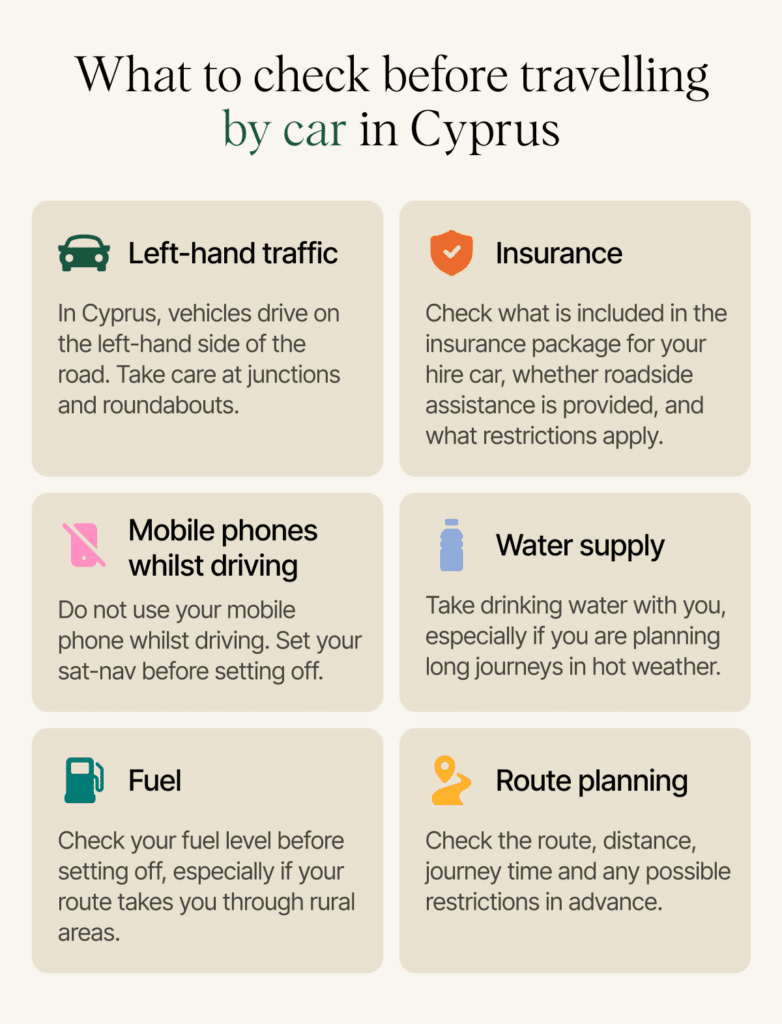
Road safety is one of the most important practical issues for visitors to Cyprus. Traffic drives on the left, and travellers used to driving on the right can need time to adjust at junctions, roundabouts, rural lanes, and when pulling out of parking areas.
A rental car can be useful for exploring beaches, villages, and countryside areas at your own pace, particularly outside the main resorts. However, car rental in Cyprus is safest when drivers stay rested, follow local rules, and choose routes appropriate for their confidence and the weather.
What Should Visitors Know Before Driving in Cyprus?
Before driving in Cyprus, take a few minutes to familiarise yourself with the vehicle and local road signs. Wear seat belts, obey speed limits, and keep your phone out of reach while driving.
Avoid driving after alcohol, when tired, or during the hottest part of the day if you are not used to long summer journeys. Check your rental agreement for insurance cover, permitted areas of use, roadside assistance, and any current legal requirements before setting off.
Using Taxis, Buses, and Walking Routes Safely
For airport arrivals and evening plans, choose licensed taxis or pre-arranged transfers and confirm pickup details in advance. Ezoria can arrange airport transfers through trusted local partners for guests who prefer not to navigate transport immediately after landing.
Buses can be useful on popular routes, but schedules and coverage vary by area and season, so leave extra time. When walking after dark, use pavements where available, choose well-lit and visible routes, and remember that some roads around resorts are designed more for cars than pedestrians.
Health, Weather, and Natural Hazards in Cyprus
Cyprus health advice for visitors is mostly about managing heat, sun exposure, dehydration, and water safety. Serious infectious-disease concerns are not usually the defining travel risk, but weather-related disruption can quickly affect an otherwise relaxed holiday.
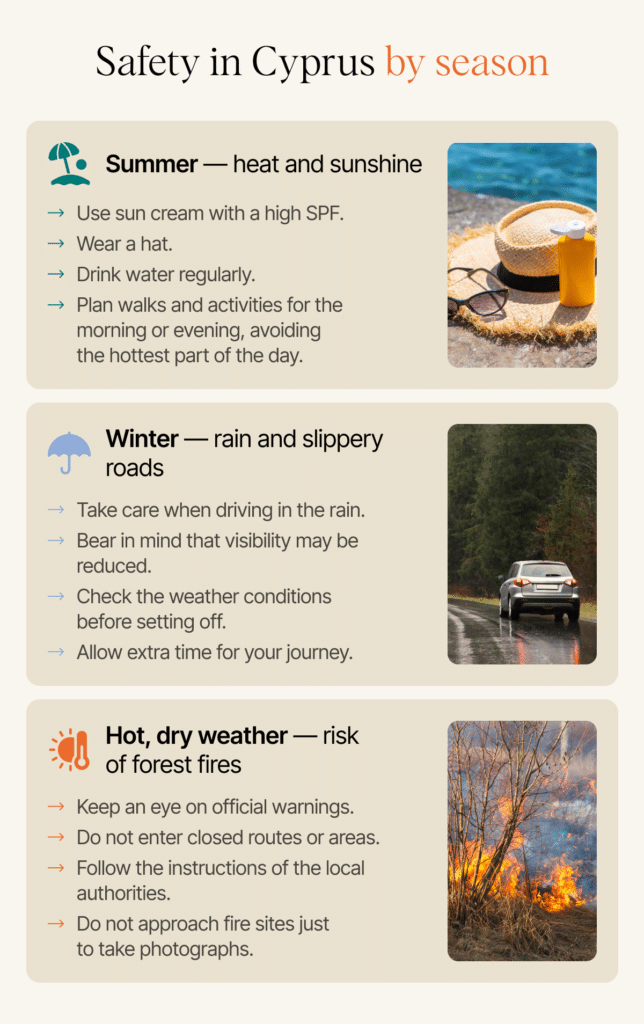
Summer temperatures can feel intense, particularly inland and during the middle of the day. Occasional wildfires in Cyprus can also affect rural areas during hot, dry periods, so follow official warnings, avoid closed trails or roads, and do not attempt to get closer for photographs.
Heat, Sun, and Water Safety
Use high-SPF sunscreen, wear a hat, and drink water regularly throughout the day. Plan strenuous walks, archaeological visits, and outdoor activities for early morning or late afternoon rather than peak midday heat.
Watch children closely near pools and the sea, and follow beach flags and lifeguard instructions where they are present. Sea conditions can change, even on a sunny day, so do not rely on appearance alone when deciding whether to swim.
Appropriate travel insurance for Cyprus should cover medical treatment, cancellations, lost belongings, and activities you intend to do. Check the policy exclusions before departure rather than discovering a gap when you need help.
Emergency Numbers, Insurance, and Consular Help
Prepare for emergencies before you travel: save local contacts, keep insurance details accessible, and know how to reach your embassy or consulate. Quick access to the right information is more useful than trying to search for it during a stressful situation.
For urgent police, fire, or ambulance assistance in Cyprus, use the local emergency services numbers listed in current official guidance, commonly 112 or 199. Verify emergency details and your travel insurer’s assistance line before departure.
If you lose a passport in Cyprus, report the loss to local police if required, contact your embassy or consulate promptly, and speak to your travel insurer. Keep digital copies of your passport, insurance policy, accommodation details, and onward travel plans stored securely before you leave home.
Cyprus remains an appealing destination for a Mediterranean holiday, with established resorts and a well-developed tourism sector. However, the wider regional situation means that travellers should stay informed and be prepared for possible changes to flight schedules or travel arrangements. Check official advice before departure, follow local guidance and choose accommodation with reliable local support. For a comfortable and well-organised stay, browse Ezoria villas with your dates.
FAQ
Is Cyprus safer than other Mediterranean holiday destinations?
Cyprus is generally regarded as a safe Mediterranean holiday destination, but it is not useful to treat any country as risk-free. Visitors should use the same precautions they would in other established resort destinations: secure valuables, plan transport after dark, stay hydrated, and drive carefully.
Can tourists drink tap water in Cyprus?
Tourists can generally use tap water for washing and brushing teeth, but many visitors prefer bottled or filtered water for drinking because taste and mineral content can vary by area. If you have a sensitive stomach or specific health needs, follow advice from your accommodation or local healthcare professional.
What should I do if I lose my passport in Cyprus?
If you lose your passport in Cyprus, contact local police where appropriate, then contact your embassy or consulate for replacement-document guidance. Notify your travel insurer as soon as possible, and keep copies of your booking confirmation, passport details, and travel itinerary available to support the process.
Is Cyprus safe to visit during the Middle East conflict in 2026?
Cyprus is not part of the ongoing military conflict, but regional tensions can affect the island's security environment and air travel. Travel advice varies between countries, so visitors should check their government's latest recommendations and confirm flight arrangements before departure.


