Guides
Cyprus in February is a rewarding choice for travellers who want quieter towns, mild sightseeing days, early almond blossom and comfortable walking weather. It is not a guaranteed beach-weather holiday, but it can be an excellent lower-season escape for couples, photographers and active travellers who value space and flexibility over hot sea temperatures.
At Ezoria, we see February as a particularly appealing month for guests planning a villa stay around Paphos, Coral Bay, Latchi, Limassol or the east coast. The island feels calmer, driving is easier, and a private villa gives you a comfortable base when an afternoon shower passes through or evenings turn cool.
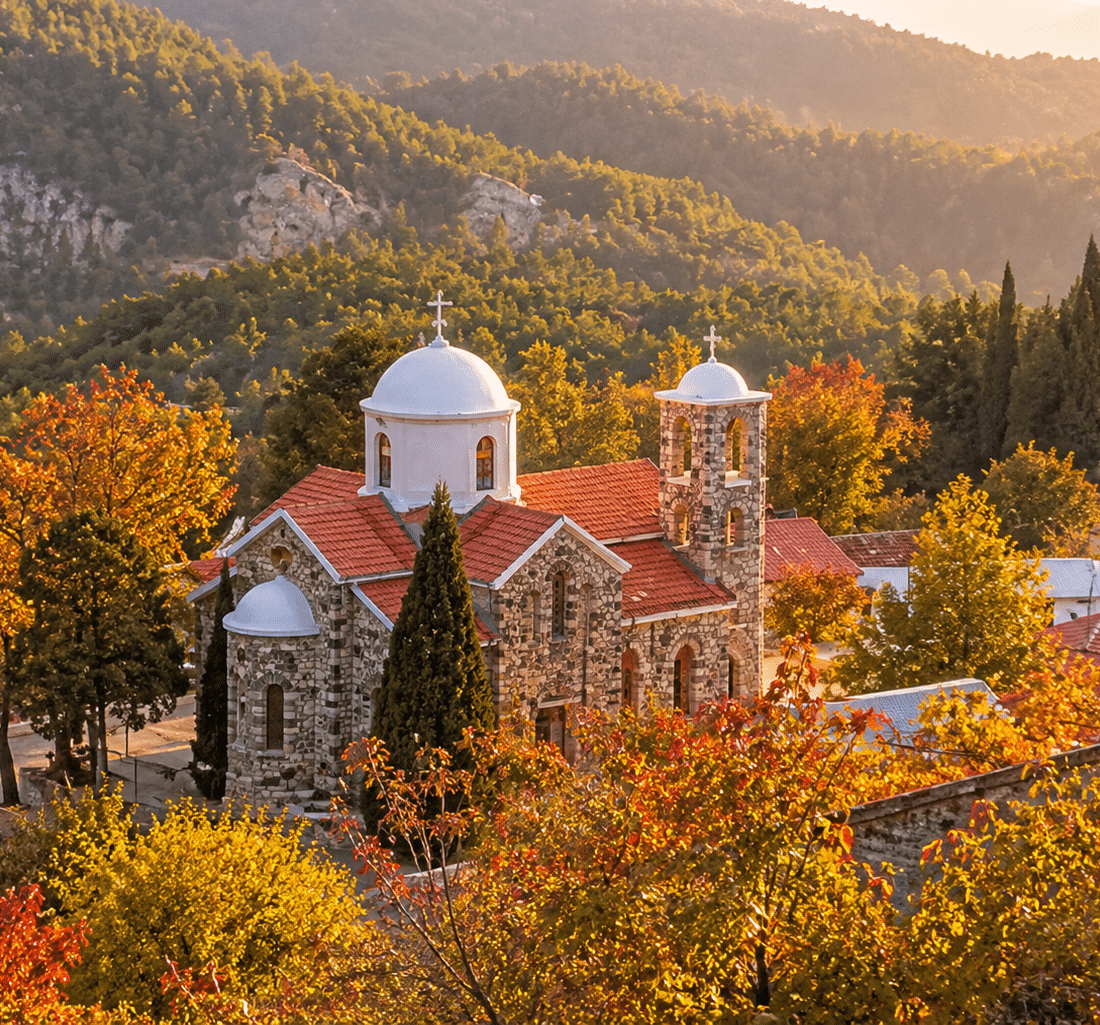
Expect changing conditions rather than one fixed forecast: a sunny coastal morning can be followed by wind or rain, while the Troodos Mountains may feel like a completely different season. Build in a little flexibility and Cyprus is worth visiting in February.
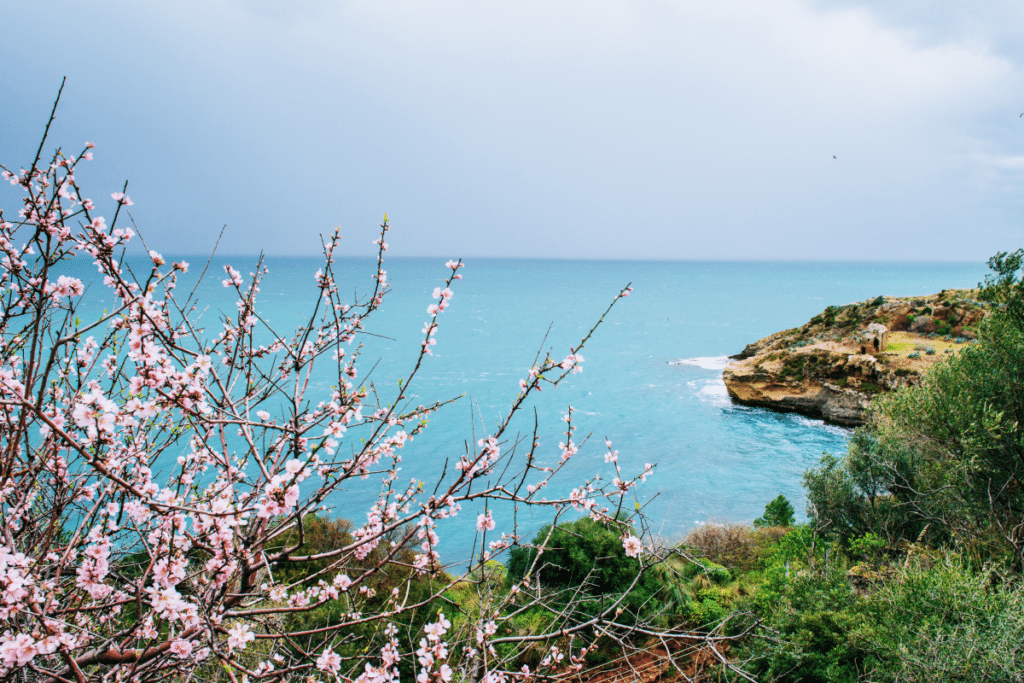
Who Will Enjoy Cyprus in February Most?
February suits hikers, road-trippers, culture-focused visitors and photographers especially well. Archaeological sites, village lanes, coastal viewpoints and countryside roads can be enjoyed without summer heat or peak-season crowds.
Couples seeking a quieter February holiday in Cyprus often appreciate the slower pace, sea views and restaurant choice in year-round towns. Families can also enjoy the island, but should plan around weather-dependent outdoor days rather than expect daily pool or beach time.
What Is Closed or Quieter in February?
Major towns, supermarkets, archaeological attractions and many restaurants remain accessible in February, particularly in Paphos, Limassol, Larnaca and year-round residential areas. Resort districts can feel noticeably quieter, which is part of their appeal for many visitors.
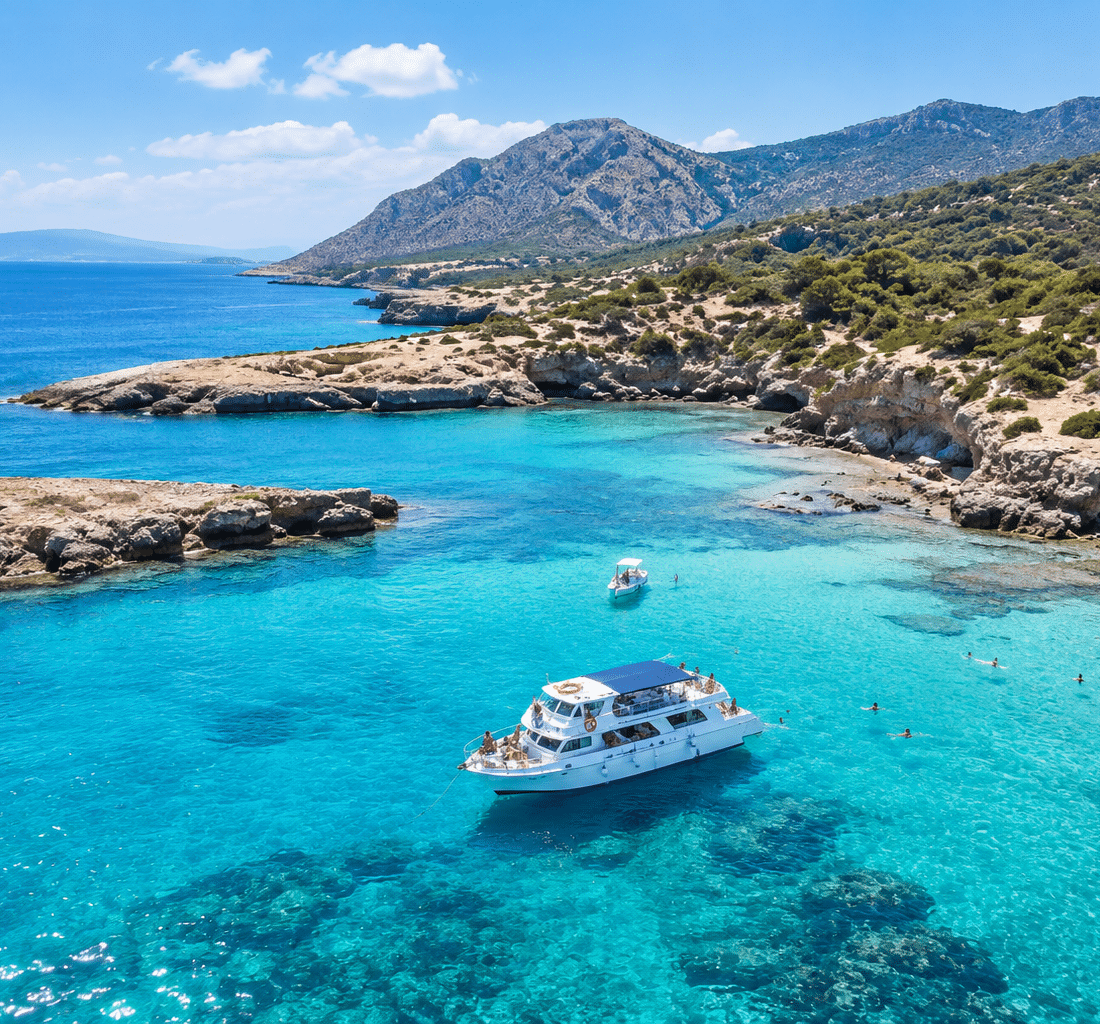
Some beach facilities, seasonal bars, boat trips and resort-focused venues may operate reduced hours or remain closed until spring. Check attraction opening times, restaurant schedules, car-hire arrangements and public transport timetables before fixing a detailed itinerary.
Cyprus Weather in February: Coast, Cities and Mountains
Cyprus weather in February is generally mild at the coast but changeable across the island, with colder conditions at higher elevations. Travellers can experience sunshine, showers, wind and cool evenings during the same week, so flexible plans and layered clothing matter.
The coast is usually the most comfortable setting for town walks, seafront lunches and outdoor sightseeing. Inland villages can be cooler, while the Troodos Mountains can remain distinctly wintry. February rain is possible, but rainy spells often make the countryside greener and more attractive for walking.
| Area | Typical February feel | Best suited to |
| Coastal Paphos, Limassol and Larnaca | Mild days, cooler evenings, occasional showers | Sightseeing, coastal walks, cafés |
| Inland villages and foothills | Cooler, greener and more seasonal | Countryside drives, almond blossom |
| Troodos Mountains | Cold, wet or wintry at altitude | Weather-aware mountain outings |
What Is the Weather Like in Paphos, Limassol and Larnaca?
Paphos, Limassol and Larnaca are sensible bases for a February holiday because their lower elevations make daytime exploration more comfortable than mountain travel. Visitors can enjoy archaeological areas, promenades, old town streets and coastal viewpoints, especially when the sun is out.
No coastal city is reliably warm every day in February. Pack for cool evenings, bring a waterproof layer and treat outdoor dining or long seafront walks as weather-dependent plans rather than guarantees.
Does It Snow in the Troodos Mountains in February?
Yes, higher parts of the Troodos Mountains can still experience snow and winter conditions in February. This is very different from the milder coastal holiday experience, even on the same day.
Before driving uphill, check the current forecast, road conditions and any local access advice. Choose a route that matches the conditions, and do not assume a mountain walk planned from a sunny coastal villa will be suitable later that day.
When Do Almond Trees Blossom in Cyprus?
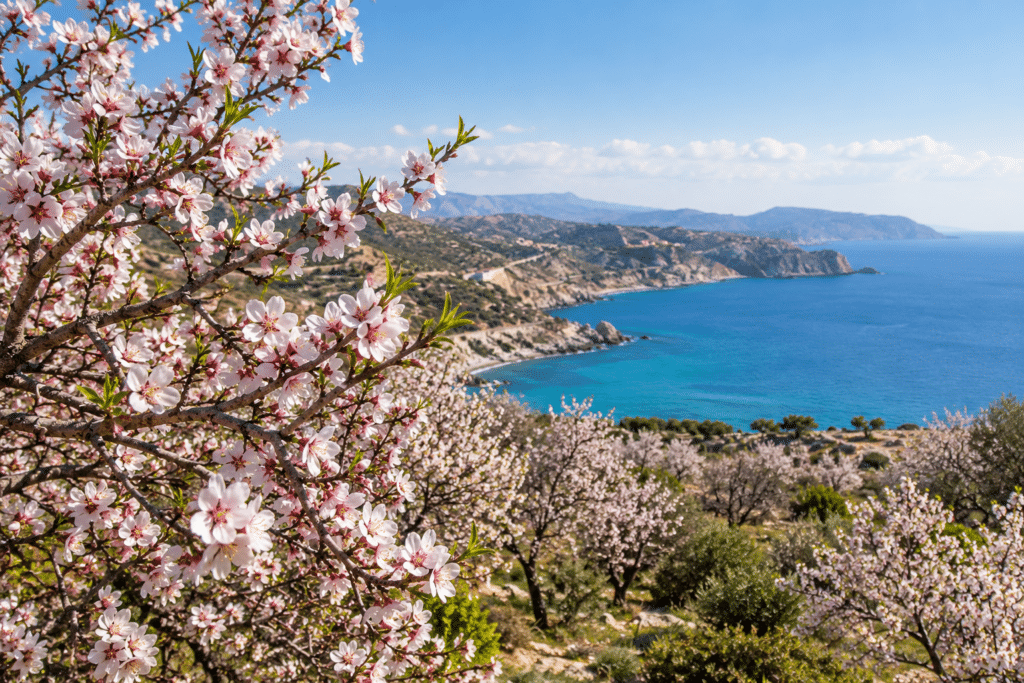
Cyprus almond blossom commonly appears from late January through February, making late winter one of the island's most photogenic seasons. The exact flowering peak varies with rainfall, temperature, wind and elevation, so no specific week can be guaranteed.
For travellers who enjoy rural scenery, almond trees in bloom can transform foothill roads and village surroundings with pale pink and white flowers. It is a lovely reason to add a countryside drive to a coastal itinerary, particularly when the landscape is green after winter rain.
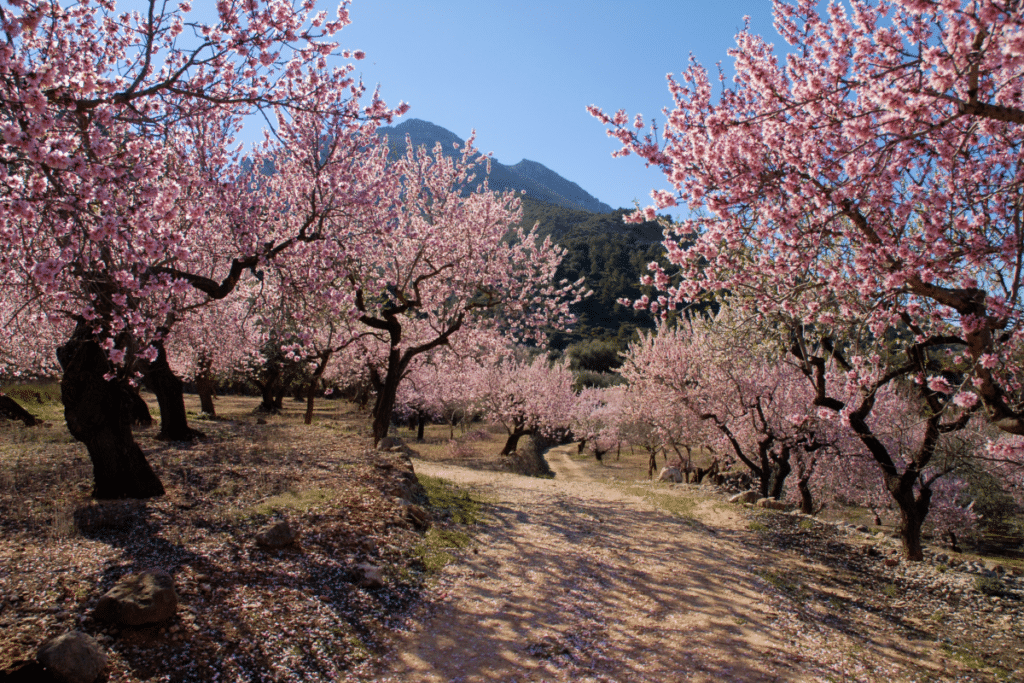
A flexible itinerary gives you the best chance of seeing Cyprus almond blossom. Leave room for an unplanned drive, ask locally about current flowering, and avoid arranging the whole trip around one orchard or village.
Where Can You See Almond Blossom in Cyprus?
Some of the best-known places to see almond blossom in Cyprus are the rural villages of Limnatis, Giolou and Salamiou. Located in the foothills and countryside of the Limassol and Paphos districts, these villages are associated with the island's annual Almond Tree Blossom Festivals, usually held between February and early March.
- Limnatis, Limassol district: Known for its almond-growing tradition, Limnatis is one of the island's best-known destinations for almond blossom. The surrounding countryside is particularly worth exploring during the flowering season.
- Giolou, Paphos district: This village offers a convenient countryside excursion from Paphos. Its annual festival celebrates the flowering trees alongside local food, music and village traditions.
- Salamiou, Paphos district: Set at around 650 metres above sea level, Salamiou is surrounded by vineyards and almond trees. Its rural setting makes it another appealing stop during a February drive through the Paphos countryside.
Almond Blossom Festivals and Local Traditions
Almond blossom celebrations can bring together village traditions, seasonal food and local crafts. They offer a more cultural alternative to a beach-focused holiday and can be especially enjoyable for visitors who want to see a quieter side of Cyprus.
Festival dates and programmes vary from year to year, and not every February trip will coincide with an event. Confirm details with official local organisers before travelling, then treat a festival as a welcome addition rather than the centrepiece of your itinerary.
Best Hiking in Cyprus in February
February is one of the more comfortable periods for hiking in Cyprus because cooler temperatures make coastal paths and lower-elevation trails easier to enjoy than in summer. The right route depends on that day's weather, the terrain and how prepared your group is.
At Ezoria, we recommend treating hiking as a flexible part of a February villa itinerary. Pick an easier coastal walk after rain or strong wind, and save higher routes for clear, stable conditions. Carry water, wear proper footwear and let the forecast guide your plans.
Coastal Walks Around Paphos and Aphrodite's Golden Beach
Coastal walks around Paphos offer open sea views, archaeological scenery and generally milder conditions than high mountain routes. They work well for visitors who want a relaxed outdoor day without committing to a full mountain hike.
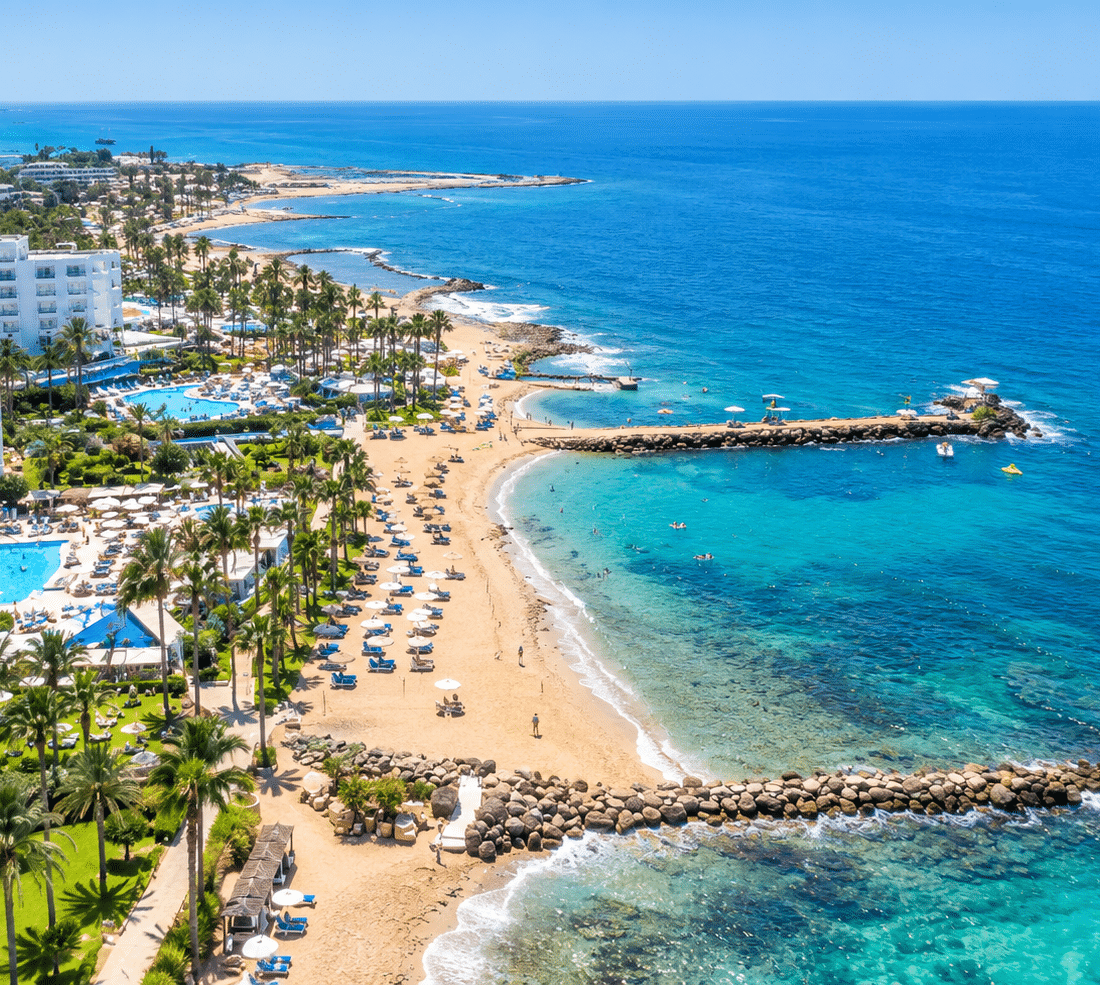
Aphrodite's Golden Beach is a scenic coastal reference point for a drive and walk, particularly when the weather is calm. Check wind and rain forecasts before setting out, keep a waterproof layer nearby and avoid exposed sections in rough conditions.
Troodos Trails: What to Check Before You Go
Troodos trails offer forest and mountain scenery, but February walking there requires more preparation than a coastal stroll. Bring warm layers, sturdy footwear, food, water and a charged phone.
Check the same-day forecast for rain, fog, snow and low temperatures, as well as the road conditions for your chosen approach. If visibility is poor or conditions change, choose a lower route or return to the coast rather than pushing ahead.
What to Pack for Cyprus in February
Pack for layers rather than for one season when visiting Cyprus in February. A practical suitcase should cover mild coastal sightseeing, rain showers, cool evenings and potentially cold mountain conditions.
Use this checklist:
- Lightweight tops and trousers for sunny daytime walks.
- A waterproof jacket or outer layer for Cyprus February rain.
- Comfortable walking shoes with grip.
- A warm jumper or fleece for evenings.
- Sun protection, including sunglasses and sunscreen.
- A warmer jacket, hat and extra socks for the Troodos Mountains.
- A small day bag for water, snacks and changing weather.
Cyprus winter clothing does not need to be bulky for a coastal stay, but mountain plans call for proper warm layers. If your trip includes both beaches and Troodos trails, packing versatility is more useful than packing heavily for either extreme.
How to Choose a Villa in Cyprus for a February Holiday
A comfortable villa can make a February holiday in Cyprus more enjoyable, particularly when the weather changes between sunny afternoons and cool, rainy evenings. When comparing properties, look beyond the pool and sea views. Indoor comfort, location and practical facilities matter just as much during the winter months.
Check Heating and Pool Facilities
Air conditioning is listed among the amenities of many Ezoria properties, but check whether the specific villa also provides heating for cooler evenings.
A heated private pool can be another useful feature, especially for families and guests who want to spend time outdoors. However, availability and additional charges vary by property. For example, Villa Oceanus H2 and Villa Oceanus H3 offer pool heating on request for an additional fee. The service must be arranged at least one week before arrival and booked for the full stay.
Choose a Location That Suits Your Plans
February is a good month for exploring different parts of Cyprus, so consider how easily you can reach restaurants, shops, walking routes and places of interest from your villa.
Paphos and Coral Bay offer access to the west coast and routes towards the Akamas Peninsula. Limassol suits visitors who want restaurants, a marina and city attractions nearby, while Larnaca provides convenient access to the airport and coastal areas.
If you plan to visit mountain villages or look for almond blossom, a rental car can make countryside excursions easier. Check whether your chosen villa has private parking, as this facility should be confirmed for each property.
Browse Ezoria villas with your dates to find a Cyprus base that suits a February road trip, walking break or peaceful couples' stay.
FAQ
Can you swim in Cyprus in February?
Yes, some visitors do swim in Cyprus in February, but the sea is cool and conditions are not beach-holiday reliable. Heated private pools, where available at a specific villa, can be a more comfortable option.
What is the warmest part of Cyprus in February?
Coastal and lower-elevation areas generally feel warmer than the interior and Troodos Mountains. Paphos, Limassol and Larnaca are practical choices for mild February sightseeing, though weather varies daily.
Is February too cold for hiking in Cyprus?
No, February is often very good for hiking in Cyprus, especially on coastal and lower-elevation routes. Mountain hikes need warmer clothing and a same-day check for rain, fog, snow and road conditions.